

- Master Movers Inc
Questions Homeowners Forget to Ask Before Moving
Key Takeaways
|
Moving arrangements may seem settled once a homeowner receives a quote and chooses a date, but several unanswered questions may still affect the cost, timing, and handling of belongings. A quote may exclude certain services, access conditions can change the workload, and policies for schedule changes or damaged items may differ between moving companies. These details are easier to address before an agreement is signed than on moving day.
Knowing which questions homeowners forget to ask before moving helps bring those details into the decision process. Before selecting a mover, homeowners should understand how the estimate is calculated, who will perform the job, what preparations each property requires, and when payment is due. Asking for clear written answers makes it easier to compare moving options and confirm that the selected service matches the household’s actual needs.
What Does the Moving Quote Actually Cover?
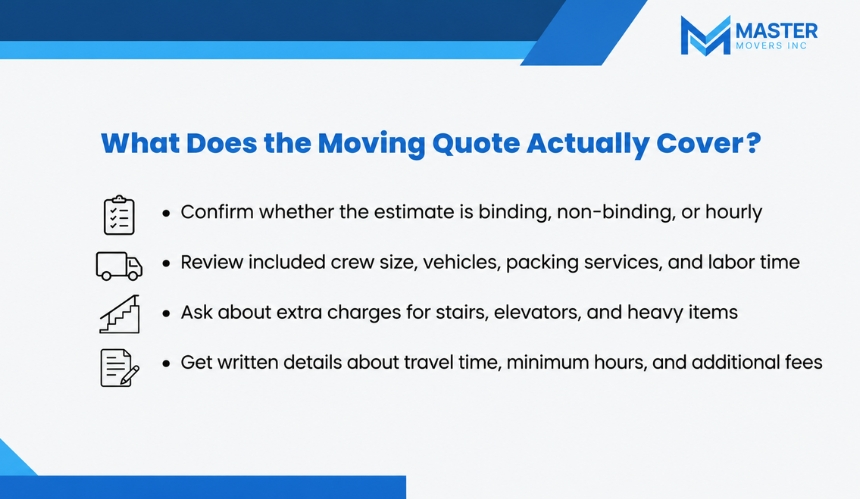
A quoted total has limited value unless the homeowner understands the services, labor, equipment, and time included in it. Before comparing estimates, ask each company to identify the planned inventory, crew size, vehicle requirements, packing assistance, and expected working hours. The written scope should reflect the actual move rather than a simplified description that leaves important work unpriced.
Is the Estimate Binding, Non-Binding, or Hourly?
Ask whether the quoted amount is fixed under stated conditions, subject to adjustment, or calculated from the crew’s actual working time. For hourly pricing, confirm when billable time begins and ends, whether travel time is included, and whether a minimum number of hours applies. If the price depends on inventory or weight, ask what happens when the final quantity differs from the information supplied during the estimate.
The estimate should also identify its expiration date and explain whether changing the move date, destination, or requested services requires a revised quote. These questions establish how closely the initial figure represents the amount that may eventually be charged.
Which Situations Can Add Charges?
Homes throughout Dallas can differ in stair access, parking distance, doorway clearance, and the effort required to move large belongings. When comparing local movers in Dallas, TX, homeowners should ask which property or inventory conditions could increase the quoted amount before accepting an estimate.
Request written details about possible charges for stairs, long carrying distances, elevators, heavy items, packing materials, disassembly, additional stops, waiting time, or work that extends beyond the scheduled period. The homeowner should also ask how unlisted belongings are priced if they are added before moving day. This makes it possible to compare the likely total rather than choosing a company solely by the lowest initial figure.
Who Will Handle the Move and the Belongings?
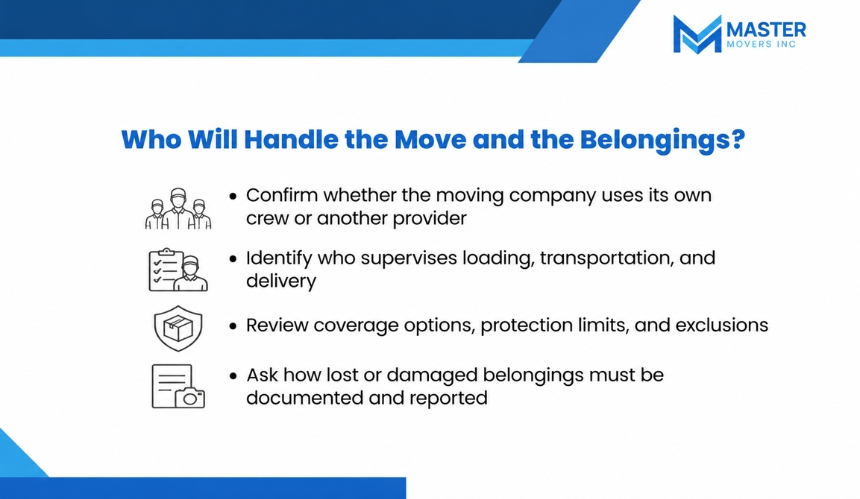
Homeowners often discuss the job with one representative without confirming who will arrive on moving day. The company named on the estimate, the crew performing the labor, and the party responsible for transporting the shipment should be clearly identified. Asking about these roles helps homeowners understand who will control their belongings at each stage and who should answer questions if a problem occurs.
Texas Licensing Check: The Texas Department of Motor Vehicles states that movers operating within Texas must be licensed. Homeowners can verify a company through the TxDMV Truck Stop database, where an “Active” certificate status confirms that the mover is currently licensed. |
Will the Company Use Its Own Crew or Another Provider?
Ask whether the booked company will supply the vehicle, crew, and supervision or arrange for another provider to complete any part of the move. If another business may be involved, request its name, responsibilities, and contact information before agreeing to the service.
Homeowners should also confirm who will lead the crew and how last-minute staffing changes are communicated. For a move involving packing, transportation, and delivery, ask whether the same company remains responsible throughout the process or whether control transfers between separate providers.
What Protection and Claims Terms Apply?
Ask the mover to explain the available protection options, any limits or exclusions, and whether particular items require separate documentation. The homeowner should know how compensation would be calculated if an item were lost or damaged, rather than assuming that every belonging automatically receives full replacement-value protection.
The claims procedure also matters before the move begins. Confirm how damage must be reported, what photographs or receipts may be requested, and how much time is allowed for submitting a claim. Ask whether belongings packed by the homeowner are treated differently from items packed by the moving crew. These answers clarify what records should be created before anything is loaded.
Mover Response Timeline: According to the Texas Department of Motor Vehicles, customers must file a written claim involving disputed charges, lost belongings, or damaged items within 90 days of delivery. The mover generally has 23 days to acknowledge the claim and 90 days after receiving it to pay, deny, or make a firm written settlement offer. |
What Must Be Arranged at Both Properties?
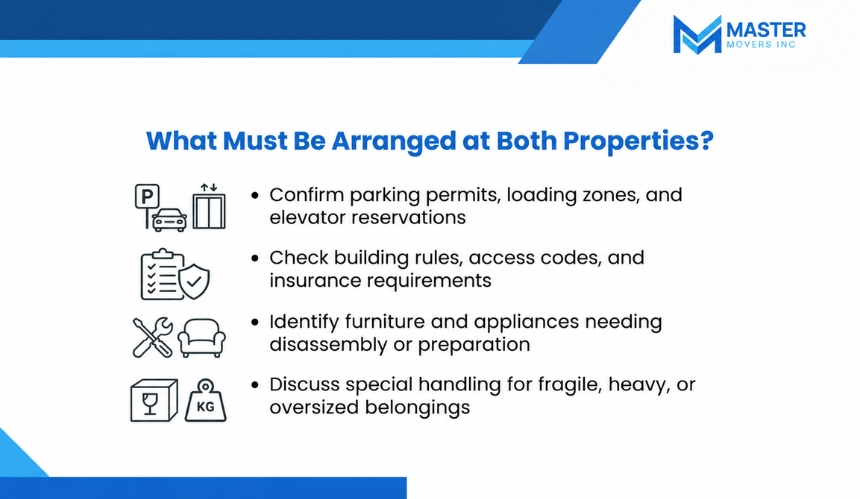
A moving crew needs a usable route from the vehicle to the rooms where belongings will be collected or placed. Homeowners should ask which access arrangements they must complete at the current property and the destination before moving day. Confirming these responsibilities early prevents unresolved building rules, blocked loading areas, or unprepared belongings from interrupting the scheduled work.
Who Is Responsible for Parking, Elevators, and Building Access?
Ask who must reserve loading space, obtain parking permission, schedule a service elevator, and provide entry instructions for each property. Managed buildings may limit moving hours or require advance approval, so the homeowner should obtain the relevant rules and send them to the mover before the scheduled date.
Confirm whether property management requires a Certificate of Insurance, elevator protection, floor coverings, or a named onsite contact. The mover should also receive gate codes, dock instructions, clearance limits, and the approved entry point. These questions determine which arrangements fall to the homeowner, building management, or the moving company.
Which Items Need Packing, Disassembly, or Special Handling?
Ask which belongings must be boxed, emptied, disconnected, or dismantled before the crew arrives. Large furniture, wall-mounted televisions, exercise equipment, appliances, artwork, pianos, and fragile pieces may require preparation that is not included automatically. Confirm whether the mover will complete that work or expects the homeowner to handle it in advance.
The homeowner should identify items with unusual dimensions, weight, fragility, or access requirements during the planning stage. Ask what information, photographs, measurements, or packing materials the mover needs. This allows the company to prepare for the actual inventory and prevents a specialized item from being discovered only when loading begins.
What Happens if the Schedule Changes?
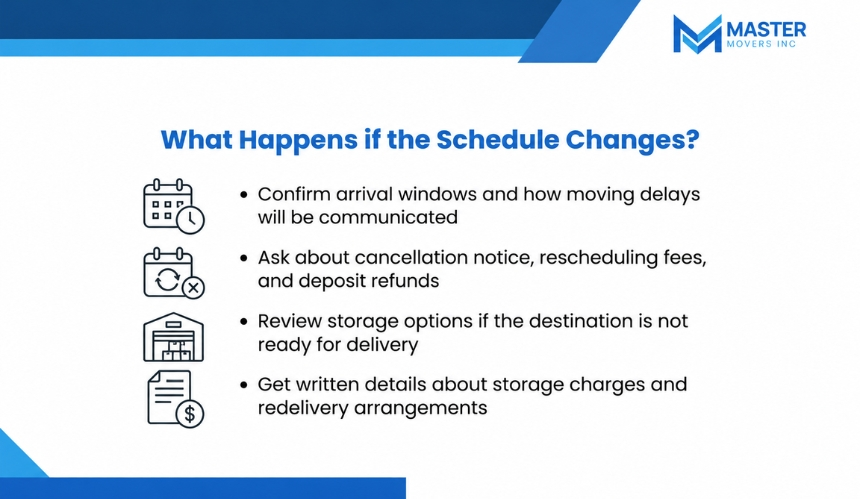
A moving date depends on property availability, transportation conditions, crew scheduling, and the homeowner’s readiness. Even when the preferred date is confirmed, homeowners should ask how changes to the timing are handled before signing. The answers should explain how updates are delivered, what flexibility exists, and what happens to the belongings if pickup and destination access no longer align.
How Are Arrival and Delivery Windows Communicated?
Ask whether the company provides a specific arrival time or a broader service window, and confirm when the final timing will be issued. Homeowners should know whom to contact on moving day, how to report delays, and whether the crew will call before reaching the property.
For moves that do not provide immediate delivery, ask how the delivery window is calculated and how much notice will be given before arrival. Confirm whether the homeowner must be present, and what procedure applies if the crew arrives at the destination before authorized access is available.
What Are the Cancellation, Rescheduling, and Storage Terms?
Ask how much notice is required to cancel or move the booking to another date. The agreement should explain whether a deposit is refundable, whether changing the date creates a new rate, and what happens if the requested replacement date is unavailable. These terms should be understood before the original booking is approved.
If the destination will not be ready when the belongings are collected, ask whether storage can be arranged, where the shipment would be held, and how redelivery would be scheduled. Confirm the associated handling, storage, and redelivery terms in writing to prevent an unexpected timing gap from creating an undefined arrangement.
What Should Be Confirmed Before Final Payment?
The end of a move should include more than unloading the last item and collecting payment. Homeowners should ask how the completed work, delivered inventory, and final amount will be reviewed before the transaction is closed. A defined closing process provides an opportunity to identify missing items, visible damage, or billing differences while the relevant documents and crew information remain available.
How Will Inventory and Existing Damage Be Documented?
Ask whether the moving company creates an inventory and how each item or container will be identified. Before loading begins, the homeowner should understand where existing scratches, dents, cracks, or other condition notes will be recorded. Photographs taken before the move can supplement the company’s paperwork, especially for furniture, electronics, artwork, and other significant belongings.
At delivery, ask the homeowner how they can verify that every listed item has arrived. Confirm whether condition concerns should be written on the delivery document before it is signed. This review does not replace the company’s claims procedure, but it creates a timely record of what was received and what appeared to be different upon delivery.
When Is the Remaining Balance Due?
Ask when the final balance is due, which payment methods are accepted, and who is authorized to collect it. The homeowner should know whether payment is due before unloading, upon delivery, or after the completed work has been reviewed. Any deposit already paid should appear clearly on the final statement.
Before submitting the remaining amount, request an itemized invoice that shows the original service, approved changes, payments received, and the balance due. If the total differs from the expected amount, ask for an explanation of each adjustment before signing the closing documents. Obtain a receipt that identifies the company, the payment date, the amount, and the completed move.
Homes in Dallas, TX, can differ in driveway access, stair layout, parking availability, and the preparation required for large or fragile belongings. A detailed moving assessment can identify the necessary crew, equipment, handling requirements, and property arrangements before a quote is approved.
Master Movers can review the planned inventory and answer questions about scheduling, responsibilities, and service terms. Contact the team to discuss the move and request an estimate based on the household’s actual requirements.
Frequently Asked Questions
How can homeowners compare moving estimates accurately?
Homeowners should compare the services, crew size, working hours, vehicle requirements, packing assistance, equipment, and possible additional charges included in each estimate. Comparing these details provides a more accurate understanding of the expected cost than simply selecting the lowest quoted price.
Should homeowners photograph their belongings before moving?
Yes, homeowners should photograph furniture, electronics, artwork, appliances, and fragile belongings before the moving crew begins loading. These photographs provide a clear record of each item’s existing condition and may support a claim if damage occurs during transportation or delivery.
Can movers charge extra for items missing from the original inventory?
Yes, movers may apply additional charges when belongings were not included in the original inventory. Extra items can require more packing materials, loading time, vehicle space, or specialized equipment, which may increase the final amount charged for the moving service.
What should homeowners do if their new property is not ready?
Homeowners should ask whether the moving company can temporarily store their belongings until the destination becomes available. They should also request written details about the storage location, security arrangements, handling charges, storage fees, delivery schedule, and cost of transporting the belongings again.
Which documents should homeowners keep after completing the move?
Homeowners should retain the signed moving agreement, written estimate, inventory list, condition reports, itemized invoice, payment receipt, and any photographs taken before and after the move. These records can help resolve billing concerns or support claims involving missing or damaged belongings.