
- Master Movers Inc
Local Moving Checklist for Short-Distance Relocations
Key Takeaways
|
A short distance between homes does not remove the need for careful moving preparation. Local relocations often involve completing pickup, transportation, and unloading within the same day, which leaves little time to resolve missing access arrangements or finish packing after the crew arrives. Delayed keys, blocked loading areas, unclear labels, or overlooked furniture can disrupt the sequence even when the destination is only a few miles away.
A local moving checklist for short-distance relocations connects each preparation task to the point at which it must be completed. It helps homeowners confirm booking details, prepare belongings, open safe routes at both properties, coordinate the loading and unloading order, and complete a final review before the crew leaves. The following checklist organizes those responsibilities so the household, properties, and belongings are ready for every stage of the move.
Texas Moving Check: The Texas Department of Motor Vehicles states that movers operating in Texas must be licensed. Homeowners can use the agency’s Truck Stop lookup to confirm that a company has an “Active” TxDMV certificate before adding the mover to the finalized relocation plan. |
Confirm the Local Move Details Before Booking
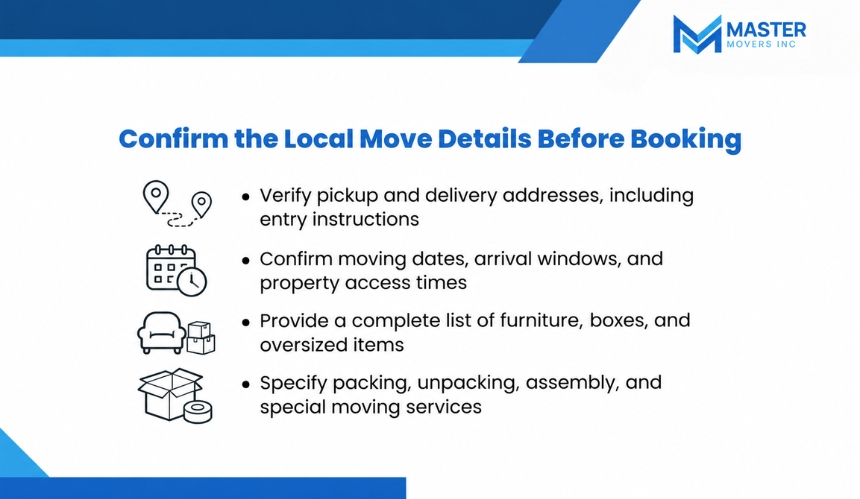
Before packing begins, the homeowner should establish exactly what the moving company is expected to complete and when each property will be available. The booking information must reflect the actual addresses, belongings, requested assistance, and access conditions. Confirming these details creates a usable plan for the crew and prevents incorrect assumptions from carrying into moving day.
Record the Addresses, Schedule, and Access Times
Provide the complete pickup and delivery addresses, including apartment numbers, building names, gate details, and the entrances the crew should use. Confirm the planned moving date, arrival window, and the time when access begins and ends at both properties. If keys or possession will transfer on moving day, identify who will receive them and when the destination can be entered.
The checklist should also include the primary contact for each location. Record the phone numbers for the homeowner, property manager, leasing office, or other person responsible for granting access. This gives the crew a clear contact if an entrance is locked or the delivery property is not ready.
Provide an Accurate List of Belongings and Services
List the furniture, appliances, the expected number of boxes, fragile items, oversized items, and items requiring disassembly. Dallas households may move between properties with very different stairs, doorways, and loading access. When booking local movers in Dallas, TX, homeowners should provide property details along with the inventory so the planned vehicles, equipment, and crew match the actual relocation.
Specify whether packing, unpacking, furniture assembly, or piano moving is required. Mention anything likely to change before moving day and ask when the final inventory must be submitted. An accurate list allows each requested service to be scheduled, rather than leaving the crew to discover additional work at pickup.
Before Loading: TxDMV explains that a licensed mover must provide a written proposal before loading begins. The document should describe the services and identify the maximum amount the customer may be required to pay. Add reviewing the proposal and moving contract to the pre-move checklist. |
Prepare Belongings for Same-Day Transportation
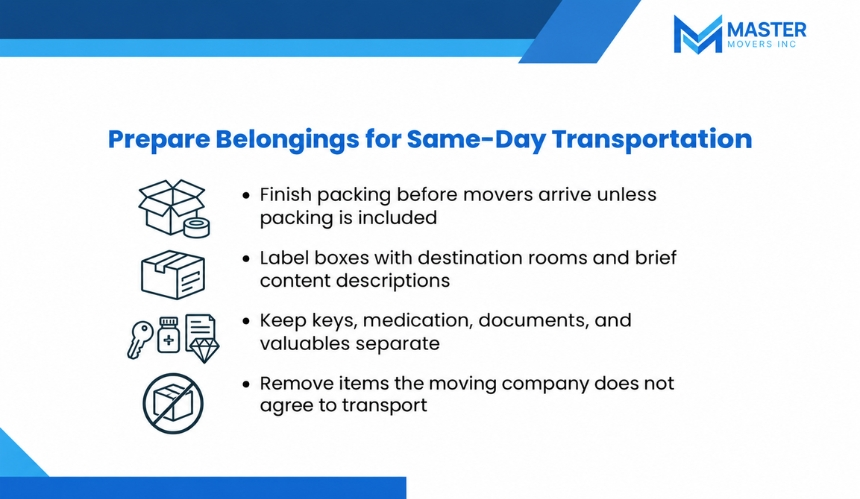
A short-distance move often places packing, loading, travel, and unloading on a single continuous schedule. Every item should therefore be ready before the moving crew arrives. The preparation checklist should distinguish between belongings that will enter the moving vehicle and those the homeowner will carry personally, and make each packed container easy to identify at the destination.
Pack and Label Items by Destination Room
Finish packing before the scheduled arrival unless packing assistance is included in the booking. Use containers that can be closed securely, and avoid leaving loose objects on furniture or across walking routes. Each box should identify its destination room and include a brief description of its contents, such as kitchen cookware, bedroom linens, or office supplies.
Apply labels to more than one visible side so they remain readable when boxes are stacked. If the new property uses different room names or has multiple levels, choose simple labels everyone can follow. Clear identification allows the crew to place boxes correctly without repeatedly stopping to ask where they belong.
Separate Essentials and Items the Movers Will Not Transport
Prepare a personal-use group that will not enter the moving vehicle. It may include keys, identification, medication, chargers, important documents, valuables, basic toiletries, a change of clothing, and supplies needed immediately after arrival. Keep these belongings in a clearly designated area or in a personal vehicle so they are not accidentally loaded.
Ask the moving company which items it will not accept and remove those from the loading area. The homeowner should arrange separate handling for anything outside the mover’s policy rather than presenting it upon the crew’s arrival. This check keeps the moving load limited to belongings the company has agreed to transport.
Prepare Both Homes for One Continuous Local Move
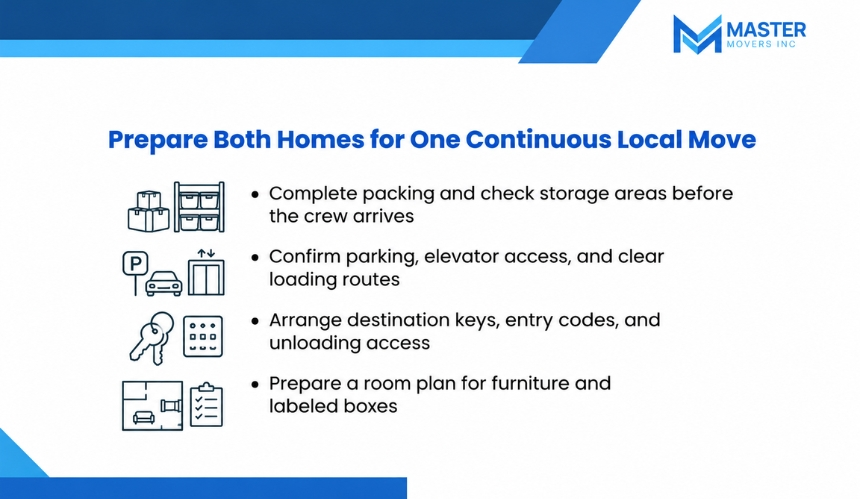
A short-distance relocation commonly moves directly from pickup to delivery within the same working period. Both properties must therefore be ready before loading begins. The homeowner should not rely on the travel interval to complete unfinished tasks at the destination. This part of the checklist coordinates the two homes so the crew can move from one address to the other without an avoidable interruption.
Complete the Pickup-Side Tasks Before the Crew Arrives
Finish packing, close and label every box, and separate anything that will remain behind before the scheduled arrival. Confirm that the moving vehicle can reach the designated loading point and that the route from each room to the exit is available. Any elevator reservation, gate access, or building approval needed for pickup should already be active.
Before loading starts, complete a final check of closets, cabinets, storage spaces, garages, and outdoor areas. This prevents belongings from being discovered after the crew has already left for the nearby destination.
Have the Destination Ready Before Loading Ends
Arrange for an authorized person to reach the destination before the moving vehicle. That person should have the keys, entry codes, parking access, and any elevator reservation needed for unloading. The destination should also have a clear room plan so labeled boxes and furniture can be directed to their intended locations immediately.
If access depends on a landlord, seller, building manager, or another household member, confirm the handoff before the pickup property is emptied for pickup. A short travel distance leaves little time to resolve a locked entrance or unavailable unloading area after the vehicle is already in transit.
Track Belongings From Loading Through Unloading
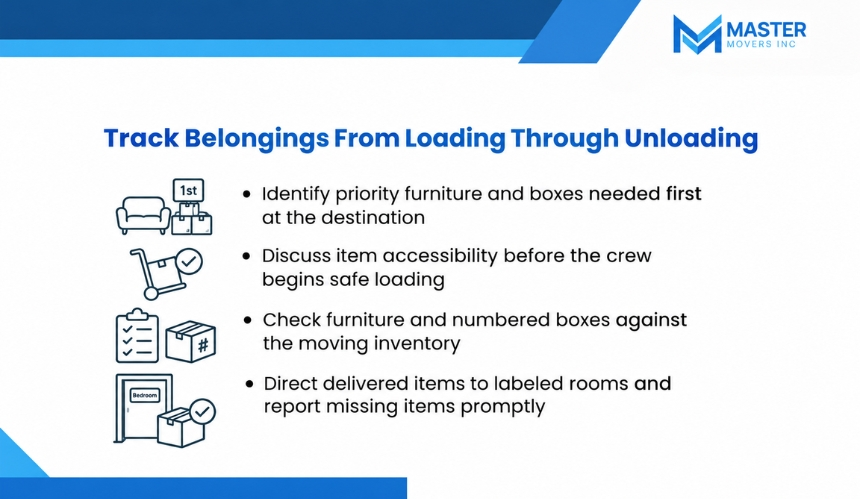
During a short-distance move, belongings may leave one property and reach the next within a few hours. The checklist should provide a simple way to follow what enters the moving vehicle and where it goes after arrival. This active tracking reduces confusion between pickup and placement, so you don’t have to wait until the end of the day to identify a missing box or misplaced item.
Identify the Required Loading and Unloading Order
Before loading begins, identify furniture and boxes that will be needed first at the destination. Beds, basic kitchen supplies, work equipment, and other immediate-use items should be discussed with the crew so they can be positioned appropriately within the safe loading plan. Items that belong together should remain clearly associated throughout the move.
The homeowner should not direct how weight is distributed inside the vehicle, since the moving crew controls safe loading. Instead, provide the priority list before items are loaded onto the truck. This allows accessibility needs to be considered while the load is being arranged.
Check Items as They Reach the Destination
Use the inventory or box count created before the move to confirm deliveries during unloading. Mark large furniture pieces and numbered boxes as they arrive at the destination, rather than relying on a final visual estimate. If an item cannot be located, ask about it while unloading is still underway and the vehicle remains onsite.
Direct each delivered item to its labeled area, then note anything placed temporarily elsewhere. This keeps the arrival check separate from unpacking and helps the homeowner confirm that the short-distance shipment has moved from the pickup property to the destination as planned.
Complete the Closeout Before the Crew Leaves
A local move is not complete when the last box enters the new home. Before releasing the crew, the homeowner should review the pickup property, the condition and placement of delivered belongings, and the final service record. Completing these checks while the vehicle and crew remain onsite allows questions to be addressed at the point when the moving work concludes.
Walk Through Both Properties One Last Time
Check every room, closet, cabinet, garage, patio, and storage area at the pickup property before access is surrendered. The purpose of this walkthrough is to find belongings that never reached the loading area, not to recount items already tracked during transportation. Confirm that nothing intended for the move remains behind.
At the destination, check that large furniture is in the requested room and that reassembly included in the booking has been completed. Note visible concerns before unpacking changes the condition or location of an item. If something requires attention, follow the mover’s procedure for recording it before the crew departs.
Review the Completed Service and Payment Record
Compare the completed work with the services listed in the booking. Confirm that requested packing, disassembly, transportation, placement, and reassembly tasks were performed where applicable. Any approved change made during the move should appear clearly on the final document rather than being represented by an unexplained total.
Review the amount due, subtract any deposit already paid, and request clarification for an unfamiliar charge before making the final payment. Keep a copy of the completed service record and payment receipt with the moving documents. These records provide a clear endpoint for the short-distance relocation.
Properties throughout Dallas, TX, can differ in parking access, entry procedures, stair layouts, and the time available for moving activities. A pre-move review can connect those conditions to the household inventory, required services, and same-day schedule before packing and loading begin.
Master Movers can review both addresses and help identify the crew, vehicle, equipment, and preparation needed for the planned relocation. Contact the team to discuss the move and request an estimate based on the belongings, property access, and short-distance moving requirements.
Frequently Asked Questions
How far in advance should a short-distance move be scheduled?
Homeowners should request availability as soon as the moving date becomes reasonably certain, especially when planning for a weekend, month-end, or another limited window. Early booking leaves time to confirm the inventory, arrange building access, and finish packing. The exact lead time depends on the mover’s schedule and the household’s requirements.
When should utilities be transferred for a local move?
Arrange utility start and stop dates after the possession schedule is confirmed. Keeping electricity and water active at both properties during the moving period supports lighting, cleaning, appliance checks, and basic use. Homeowners should avoid ending service at the pickup address before the final walkthrough or starting destination service after the planned unloading time.
Should the new home be cleaned before moving day?
Cleaning the destination before moving day keeps empty rooms available for a complete cleaning and prevents boxes or furniture from blocking surfaces. If advance access is unavailable, designate which areas must remain clear during unloading. Cleaning plans should be coordinated with the property handoff to avoid delaying the crew’s scheduled arrival.
How should appliances be prepared for a local move?
Homeowners should follow the manufacturer’s instructions for shutting down, cleaning, securing, and restarting each appliance. Ask the mover which preparation tasks must be completed before arrival and whether disconnection or reconnection is included. Refrigerators, washers, dryers, and other large appliances may require different preparation times, so these tasks should not be left until moving morning.
Can food and plants be included in a short-distance move?
Policies for food, plants, liquids, and temperature-sensitive items vary by moving company. Homeowners should ask what the mover will accept before packing those items. Anything excluded should be consumed, donated, discarded appropriately, or transported separately. Making that decision early prevents unapproved items from remaining in the home when loading begins.
When should homeowners update their mailing address?
Update the mailing address effective as of the possession date, and notify financial institutions, insurers, employers, healthcare providers, subscription services, and other essential contacts. Homeowners should also check whether licenses, registrations, or local accounts require separate updates. Completing these changes before the move reduces the amount of administrative work waiting after delivery.